If you have a food allergy, intolerance, coeliac disease or another dietary requirement, you've probably heard people talk about the "14 major allergens".
In the UK, food businesses must provide information if any of 14 regulated allergens are used as ingredients in the food and drink they provide.
Knowing what they are and what the rules actually mean - can make checking food labels and asking questions when eating out a little easier.
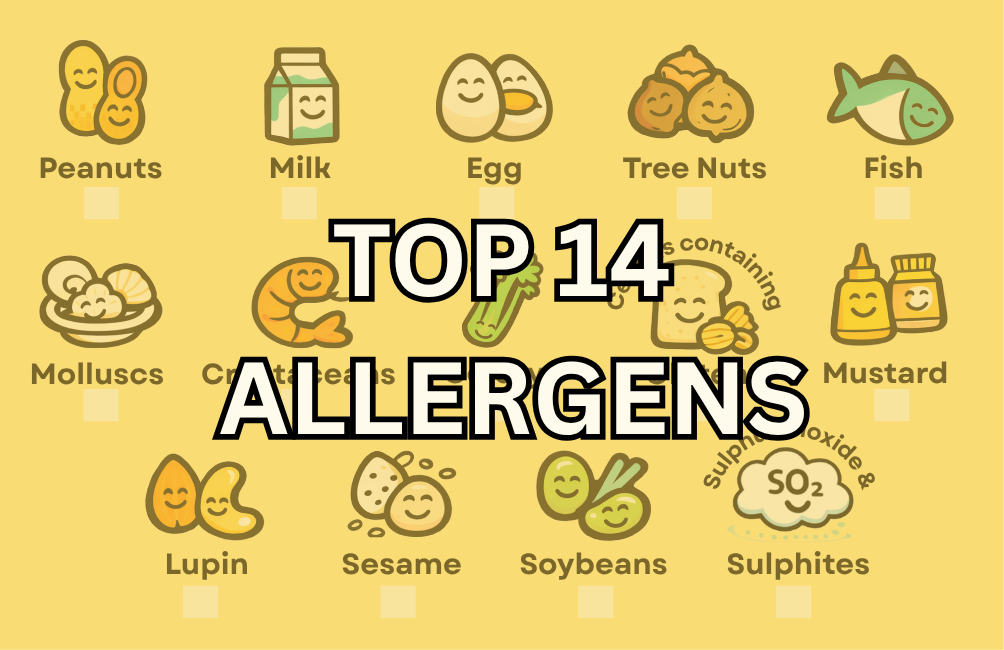
The 14 regulated allergens in the UK are:
1. Celery
This includes celery stalks, leaves, seeds and celeriac. It can appear in foods such as soups, stocks, salads and seasonings.
2. Cereals containing gluten
This includes wheat, rye, barley and oats, as well as certain varieties such as spelt and Khorasan wheat.
It's important to remember that the regulated allergen is cereals containing gluten, rather than simply "gluten".
3. Crustaceans
Examples include prawns, crab, lobster and crayfish.
4. Eggs
Egg can be found in many foods including cakes, pastries, mayonnaise, pasta and some sauces.
5. Fish
This covers fish and products containing fish.
6. Lupin
Lupin seeds and flour can be used in baked goods and other foods. It may be less familiar than some of the other allergens on the list.
7. Milk
This includes milk and milk-containing ingredients. Milk can appear in products including butter, cheese, cream, yoghurt and many processed foods.
8. Molluscs
Examples include mussels, oysters, squid and snails.
9. Mustard
Mustard can be found in foods such as dressings, marinades, sauces and condiments.
10. Nuts
The regulated group includes almonds, hazelnuts, walnuts, cashews, pecans, Brazil nuts, pistachios and macadamia nuts.
11. Peanuts
Peanuts are listed separately from nuts. They are legumes rather than tree nuts.
12. Sesame
This includes sesame seeds and ingredients made from sesame, such as tahini.
13. Soya
Soya can be found in products including tofu, soya flour and many processed foods.
14. Sulphur dioxide and sulphites
These must be declared when present above specified levels. They can be found in foods and drinks such as some dried fruits and alcoholic drinks.
Come and find Freeater at one of our events and pick up a free Top 14 Allergens reference card to keep handy.
Next at the Cardiff Glute Free Festival
For prepacked food, if one of the 14 regulated allergens is present as an ingredient, it must be clearly emphasised within the ingredients list.
You might therefore see ingredients displayed in bold, a different typeface, a different colour or another form of emphasis.
For example:
Ingredients: Flour (WHEAT), Sugar, Butter (MILK), EGG...
This is designed to make regulated allergens easier to identify when checking a product.
Food that is prepacked for direct sale (PPDS) - such as a sandwich packaged by a café before you select it - must also have a full ingredients list with the regulated allergens emphasised.
Want to know what else to look for on a food label? Read our guide to reading food labels for allergens in the UK and even if you've bought a product before, it's important to check the information on the pack each time. Find out more in Why You Should Check Food Labels Every Time.
You may also see statements such as:
"May contain nuts." or "Not suitable for someone with a milk allergy."
This is known as precautionary allergen labelling (PAL). It relates to the potential unintended presence of an allergen, for example through cross-contact, rather than the allergen being deliberately included as an ingredient.
There's more to “may contain” than the name suggests. Read our guide What Does 'May Contain' Mean on Food Labels? to understand precautionary allergen labelling and cross-contact in more detail.
No and this is an important distinction.
The 14 are the allergens specifically regulated under UK food information law. They are not a complete list of everything somebody can be allergic or react to.
People can have allergies, intolerances or other dietary requirements involving foods and ingredients outside the regulated 14.
This is one of the reasons understanding your own dietary needs and continuing to check the information relevant to you is so important.
Restaurants, cafés, takeaways and other food businesses must also provide information about the presence of the 14 regulated allergens when they're used as ingredients.
How that information is provided can vary depending on the food and how it's sold. It may be available on a menu, through written allergen information or by speaking with staff.
If you have dietary requirements, it's still important to communicate them directly with the venue and ask any questions you need to before ordering.
Planning to eat out? Read our guide to eating out with food allergies in the UK for practical tips on researching venues, communicating your requirements and checking allergen information.
Remembering ingredients, checking labels and finding somewhere to eat can become part of everyday life when you're navigating dietary requirements.
That's why we built Freeater.
Freeater helps people with food allergies, coeliac disease, intolerances and other dietary needs eat out and shop with more confidence.
With Freeater Shopping, you can scan food products and check them against your personalised dietary profile, alongside ingredients and nutritional information. When eating out, Freeater can help you discover eateries and explore information relevant to your dietary needs.
Freeater is designed to support your checks, not replace them. Always check the product packaging and ingredients before consumption, and confirm your dietary requirements directly with a venue when eating out.

Join the Freeater community